By GERALDINE TONG
Sunday, 12 Apr 2026
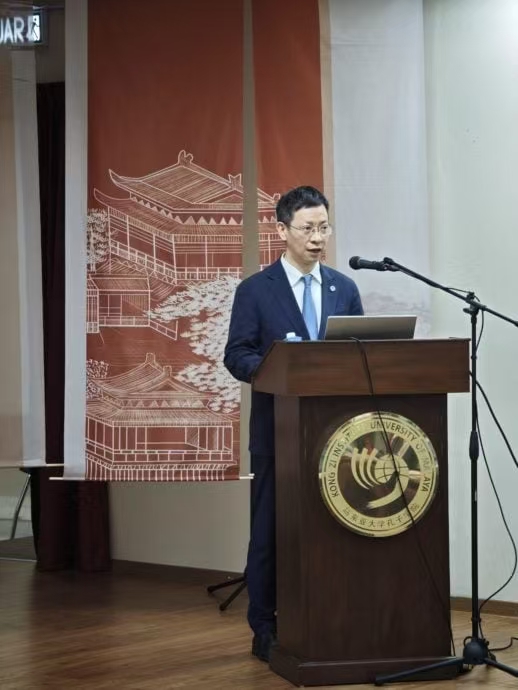
A new view: Prof Yu says China’s development story needs to be understood through shifts in productivity, industrial composition, and technological capability. — Handout
CHINA'S economic development story was defined in the past few decades by how fast it
by Malaysia-China Business Council and Bank of China (Malaysia) Bhd – at Universiti Malaya’s Kongzi Institute recently, where the president of Liaoning University in China unpacked the thinking behind Beijing’s evolving economic playbook.
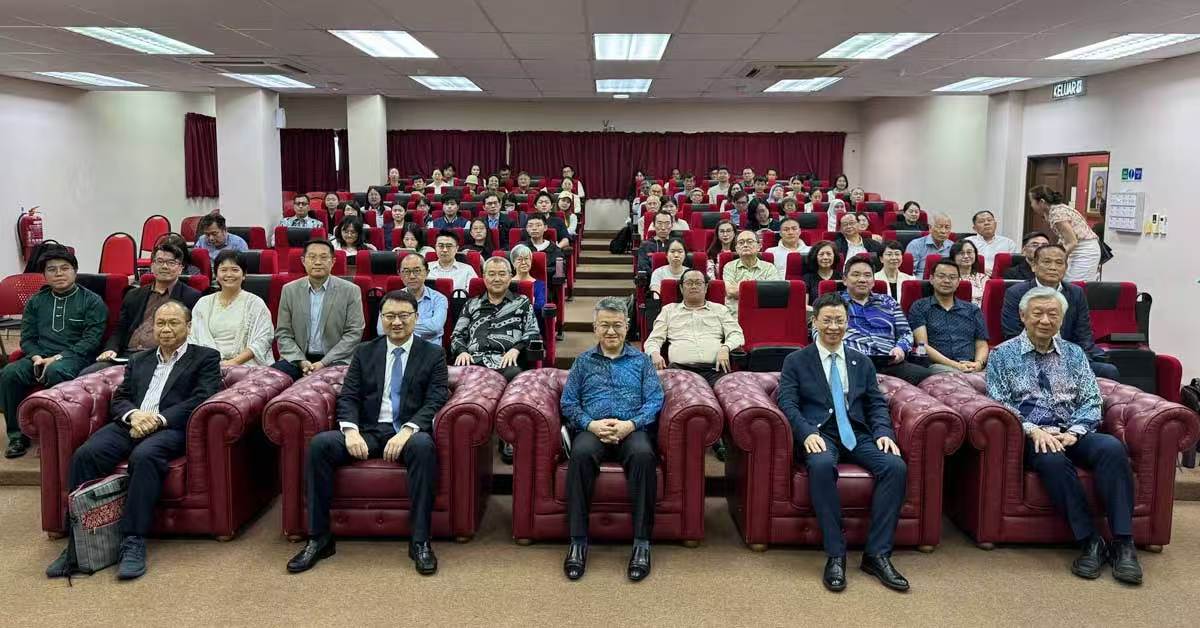
Speaking to an audience of about 100 people including policymakers, academics, students and other guests – such as Deputy Finance Minister Liew Chin Tong, Malaysia-China Business Council chairman Tan Sri Datuk Low Kian Chuan, Bank of China CEO Wu Jun and Petaling Jaya MP Lee Chean Chung – Prof Yu framed China’s transition as one rooted in structural upgrading rather than sheer expansion.
Prof Yu spoke to an audience of about 100 people including Deputy Finance Minister Liew Chin Tong, Malaysia-China Business Council chairman Tan Sri Datuk Low Kian Chuan, Bank of China CEO Wu Jun and Petaling Jaya MP Lee Chean Chung.
The professor argued that China’s development story can no longer be understood purely through growth rates but must be looked at through the lens of shifts in productivity, industrial composition and technological capability.
“This is the key to avoiding falling into the middle-income trap ... and that is why China pointing to the pillars that are innovation, green development and coordination, among others.
He described innovation as the most important driving force behind China’s next phase of growth. In 2025, China’s R&D intensity was 2.8% and had overtaken the average R&D intensity of OECD (Organisation for Economic Co-operation and Development) countries, which was 2.7%, Prof Yu said.
However, he acknowledged that gaps remain when compared with leading economies such as the United States, which had an R&D intensity of 3.5% last year.
Prof Yu also highlighted the distinction between two types of innovation, product R&D and process R&D, noting that each requires different levels of investment and institutional support.
“This comparison is important. Why? Because only when we understand the difference are we able to know which ways are appropriate to do that.”
For example, product innovation, which he described as going from zero to one, might not be suitable for a small company with limited funds to handle.
“It’s just not realistic. Therefore, from zero to one, if you want to get a good thing, then maybe you need to have organised research, which means that the government will play a key role there,” he said.
Beyond innovation, Prof Yu pointed to structural changes to China’s trade and industrial landscape as evidence of its shift towards higher-quality growth.
“The most important feature of processing trade is its low productivity,” he said, explaining that China has gradually moved away from this model towards higher value-added “ordinary trade”.
This transition, he added, reflects deeper domestic capabilities and a stronger position within global value chains.
“After 2001, the quality of Chinese products increased more than one-quarter, so this is very significant indeed,” he said, pointing to sustained improvements following China’s
saying that Chinese firms have almost doubled their productivity when compared with two decades ago. China’s broad industrial base is another defining feature of its economy, he added.
“According to the [UN’s] Standard International Trade Classification, China has covered all industries with the two-digit classification.”
(This means China produces goods across every major economic sector rather than specialising in just a few; ie, it has a highly diversified industrial base.)
“This is why we see that the Chinese manufacturing sector is so powerful today,” added Prof Yu.
Still, high-quality development is not just about production. Prof Yu underscored the importance of coordination, particularly between urbanisation and industrialisation, to ensure balanced growth, as neither can grow sustainably without the other.
“Many people move to the city; this is called urbanisation, but they cannot find a job because they do not have industrialisation. Then suddenly you’ve got a slum, and once you’ve got a slum, this will affect your social stability, and in the end, that’s very bad for the country.
“On the other hand, if you look at some regions where industrialisation is very high but urbanisation is low, you’ve got a very strong labour demand but you do not have a labour supply because not many people go there to work.”
Currently, China has slightly higher industrialisation, which is why, Prof Yu said, the Chinese government is trying to increase urbanisation to keep pace.
Green development is another key pillar, with China placing increasing emphasis on sustainability and environmental protection. Referring to the country’s goal of achieving carbon neutrality by 2060, Prof Yu pointed out that China only has 30 years to go to meet the target: “This is not easy, but still China is trying to keep its promise for sure,” he said.
He noted that China’s approach prioritises building new energy capacity before phasing out older sources.
Currently, China has slightly higher industrialisation, which is why, Prof Yu said, the Chinese government is trying to increase urbanisation to keep pace.
Green development is another key pillar, with China placing increasing emphasis on sustainability and environmental protection. Referring to the country’s goal of achieving carbon neutrality by 2060, Prof Yu pointed out that China only has 30 years to go to meet the target: “This is not easy, but still China is trying to keep its promise for sure,” he said.
He noted that China’s approach prioritises building new energy capacity before phasing out older sources.
improve people’s livelihoods.
“Certainly economic growth is not the objective. Development and also people’s living standard increases are our final objectives.”
As China moves into a new phase of its economic trajectory, its focus on quality over speed signals a broader recalibration, one that seeks to balance growth with resilience, sustainability and mutual prosperity.
Follow us on our official WhatsApp channel for breaking news alerts and key updates!
TAGS / KEYWORDS:
China , Growth Strategy , Global Economy , WTO
崇山校区:沈阳市皇姑区崇山中路66号 邮编:110036
蒲河校区:沈阳市沈北新区道义南大街58号 邮编:110136
武圣校区:辽阳市白塔区青年大街38号 邮编:111000
联系方式:024-62202013
中国沈阳 辽宁 大学 Copyright by 辽宁大学 2016 辽ICP备05001361号
崇山校区:沈阳市皇姑区崇山中路66号
邮编:110036
蒲河校区:沈阳市沈北新区道义南大街58号
邮编:110136
武圣校区:辽阳市白塔区青年大街38号
邮编:111000
联系方式:024-62202013
中国沈阳 辽宁大学 辽ICP备05001361号